How Often Should You Change Your Air Filter?
It's the easiest maintenance task on your HVAC system, and it's the one most people forget. In Houston's dust and humidity, a clogged filter doesn't just hurt your air quality — it makes your system work twice as hard and your energy bill shows it.
There is no maintenance task in your home with a higher return on time invested than changing your air filter. It costs $5-$25, takes 60 seconds, and prevents thousands of dollars in damage.
So why do most of us forget?
Because it's invisible. Because it doesn't break loudly. Because nobody set up a calendar reminder.
Let's fix that.
The Houston Answer
For an average Houston home with no pets and no allergies, change your filter:
- Every 60 days during peak summer (May–September)
- Every 90 days the rest of the year
If you have any of the following, shorten that timeline:
| Situation | Recommended Frequency |
|---|---|
| One indoor cat or dog | Every 45 days |
| Multiple pets or shedders | Every 30 days |
| Smoker in the household | Every 30 days |
| Allergies or asthma | Every 30-45 days |
| New construction nearby | Every 30 days |
| Major renovation in your home | Every 14 days during, then reset |
| Vacant home | Every 90-120 days |
How to Tell if Your Filter Is Done
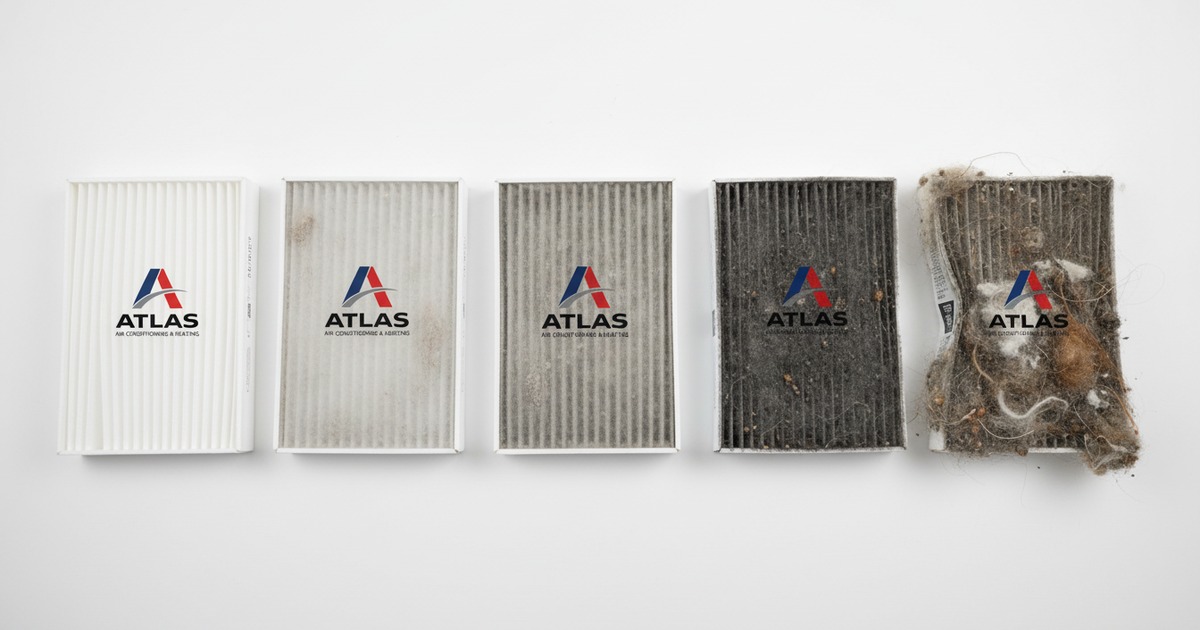
Pull it out and look at it. The clean side faces toward the air handler. If the dirty side looks gray, matted, or you can see lint piled up, replace it. If you can't see daylight through it when held up to a window, replace it.
Don't try to "extend" a filter by vacuuming it. Pleated filters get damaged when you vacuum them, and the captured particles get knocked back into the air.
Step-by-Step
-
Locate your filter. Most homes have one of two setups: a return grille on a wall or ceiling (look for a large vent with a hinged door), or a slot near the air handler in the attic, garage, or closet.
-
Note the size and direction. Filters list dimensions on the side (e.g., 16x25x1). Look for an arrow indicating airflow direction — this should point toward the air handler, away from the room. Take a picture before pulling it out so you remember.
-
Buy the right filter. Same size, same MERV rating (or close to it).
-
Slide the new one in. Arrow facing the same direction as the old one.
-
Set a reminder. Phone calendar, recurring. The #1 reason people skip filter changes isn't laziness — it's that they forgot.
What MERV Rating Should You Buy?
This is where Home Depot will try to upsell you. Don't fall for it.
MERV (Minimum Efficiency Reporting Value) measures how small a particle a filter can catch. Higher MERV = smaller particles caught.
| MERV Rating | Catches | Best For | Notes |
|---|---|---|---|
| 1-4 | Large dust, lint | Almost no one | Too coarse for residential |
| 5-8 | Pollen, dust mites | Standard homes | Cheap pleated filters, fine for most |
| 9-12 | Mold spores, pet dander | Homes with allergies | Sweet spot for most households |
| 13-16 | Bacteria, smoke | Severe allergies, immunocompromised | Can restrict airflow on residential systems |
| 17-20 | Virus particles | Hospitals, cleanrooms | Will damage residential HVAC systems |
WARNING: MERV 13+ filters look great on a marketing page, but they restrict airflow more than the standard residential blower is designed to handle. Running a high-MERV filter without upgrading your blower can starve the system, freeze the coil, and burn out the motor. For most Houston homes, MERV 8-11 is the right zone.
Cost vs. Savings
Let's do the math on a typical Houston household:
- 6 filter changes per year (every 60 days)
- $12 per filter (decent MERV 8 pleated)
- Annual cost: $72
Skipping filter changes for one year typically:
- Increases summer electric bills by 15-20% — about $300-$500 in Houston
- Shortens HVAC system life by 1-2 years — easily $1,000+ in lost depreciation
- Risks frozen coils, burned-out blowers, and emergency calls — $400-$2,000 each
TIP: Buy filters in 6-packs from Costco, Sam's Club, or Amazon. The per-filter price drops to $7-$9 and you've got a year's supply. The number one reason people skip filter changes is that they don't have a spare ready.
Common Filter Mistakes
- Wrong size. Air sneaks around the filter instead of through it. Captured nothing.
- Wrong direction. Arrow points the wrong way. Filter loses 30% of its effectiveness.
- Two filters stacked. Some people think two is better. It just chokes airflow.
- Bent filter. Forced into the slot crooked, leaving gaps. Same problem as wrong size.
- Permanent washable filters used wrong. They need to fully dry before reinsertion. Wet filters grow mold.
FAQ
What happens if I never change my air filter?
You will eventually have a major HVAC failure. The most common sequence: filter clogs → airflow restricted → indoor coil freezes → ice melts and overflows the drain pan → water damage to your ceiling and a $2,000-$5,000 repair bill. We've seen this sequence dozens of times.
Are expensive filters worth it?
Sometimes. If anyone in your home has serious allergies or asthma, MERV 11 is worth the extra few dollars. For most households, MERV 8 pleated filters at $8-$15 are fine and last just as long.
Can a dirty filter make me sick?
Indirectly, yes. A clogged filter lets the dust and pollen it should have caught keep circulating in your home. It can also create the moist conditions inside the unit that grow mold, which then gets blown into your living space. Change the filter and most of that risk goes away.
Why is my filter wet?
That's a problem. A wet filter usually means the indoor coil is freezing and melting in cycles. Could be low refrigerant, restricted airflow (often from the filter itself being old), or a failing blower. Stop running the AC and call a tech.
What about washable / reusable filters?
They work fine if you actually wash them on schedule, dry them completely, and reinstall correctly. Most people don't. For 90% of homeowners, disposable filters are simpler and the cost difference is trivial.
Related Services
How We Can Help
Preventive Maintenance
Keep your Houston AC running efficiently with preventive maintenance. Catch small issues before they become expensive emergencies.
Learn moreIndoor Air Quality
Improve your Houston home's indoor air quality. We address humidity, mold, allergens, and air purification to help your family breathe easier.
Learn moreKeep Reading
More From the Blog
Do You Really Need Duct Cleaning?
Duct cleaning is one of the most oversold services in the HVAC industry. You get a door hanger, a scary-sounding pitch, and a price that seems reasonable until you realize your ducts were probably fine. Here's when duct cleaning actually makes sense — and when it doesn't.
5 min read →SeasonalGet Your AC Ready for Houston Summer
By the time May rolls around in Houston, your AC is about to start the hardest stretch of its life. A quick spring tune-up can be the difference between a system that runs clean all summer and one that dies on the hottest day of the year — always a Saturday.
4 min read →Need Help Now?
Questions about your AC? We’re a phone call away.
Serving Houston and surrounding areas. Licensed, insured, and available same day.