
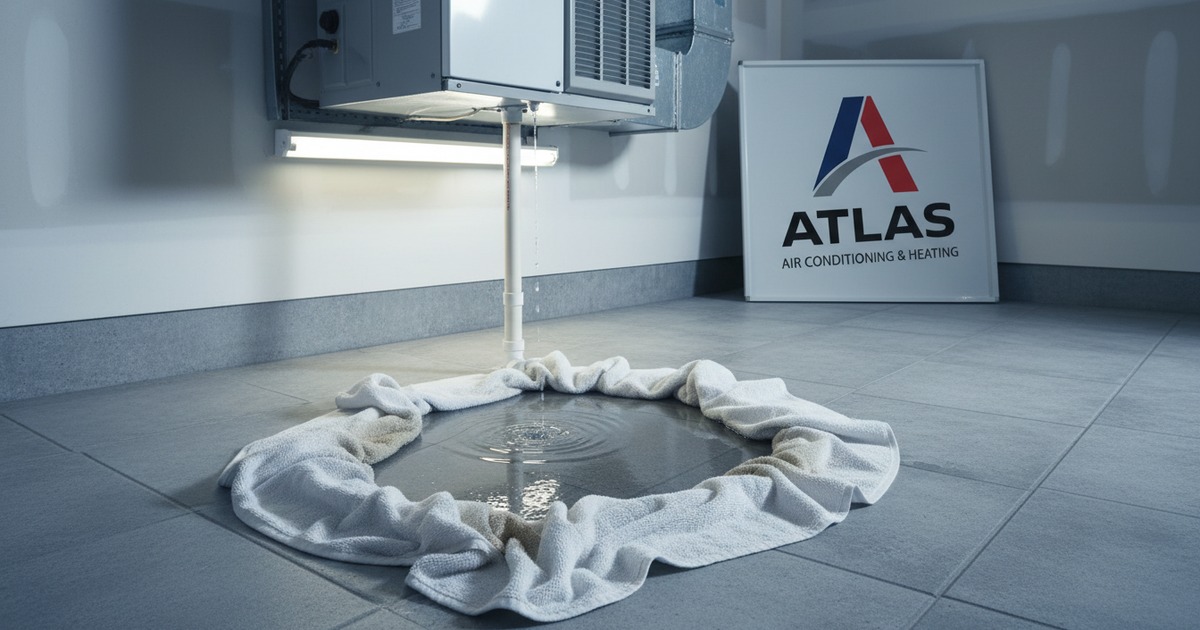
Cooling Emergency
Water Leaking from Your AC?
Puddles under the air handler, water stains on the ceiling, or dripping from a vent — act fast to prevent damage.
What's Going On
Understanding the Problem
Water is pooling around your indoor air handler, dripping from the ceiling, or leaking from an air vent. Your AC produces condensation naturally — in Houston's humidity, a system can produce 5–20 gallons of water per day. Normally this drains away through a PVC pipe. When something clogs that drain, the water backs up into your house.
Diagnosis
Common Causes
1Clogged condensate drain line
This is the cause about 90% of the time. The PVC drain line that carries water away from the evaporator coil gets clogged with algae, slime, and debris. Houston's humidity makes this worse — our drain lines clog faster than anywhere in the country.
2Cracked or overflowing drain pan
The drain pan under the evaporator coil catches water before it enters the drain line. If the pan is rusted through, cracked, or tilted wrong, water spills over the edge instead of draining properly.
3Frozen evaporator coil thawing
If the coil froze (from a dirty filter or low refrigerant), the ice melts when the system cycles off. The sudden rush of water overwhelms the drain pan and overflows.
4Disconnected drain line
In attics especially, the PVC drain line connections can come loose over time due to vibration or heat expansion. The water drips straight out of the loose joint instead of flowing to the drain.
5Air handler in the attic
Most Houston homes have the air handler in the attic. When it leaks up there, the water travels down through the ceiling before you notice it. By the time you see a stain, there may already be significant water damage above.
DIY Troubleshooting
What You Can Try
Turn the system OFF immediately
Stop the AC to stop producing more condensation. This prevents more water from accumulating while you troubleshoot. Set the thermostat to OFF (not just raising the temperature).
Contain the water
Place towels, a bucket, or a wet/dry vacuum around the leak. If it's coming through the ceiling, poke a small hole in the center of the water stain to let it drain into a bucket — this prevents the weight of pooled water from collapsing a section of ceiling.
Find and check the drain line
Follow the PVC pipe from the air handler to where it exits the house (usually outside near the foundation or into a bathroom drain). Check if water is flowing from the end. If nothing is coming out, the line is clogged.
Try to clear the clog with a wet/dry vac
If you have a shop vac, you can try attaching it to the outdoor end of the drain line and sucking the clog out. Cover the connection with a rag to create a seal. Run it for 30 seconds.
Check the drain pan
If you can access the air handler (usually in the attic or a closet), look at the drain pan underneath. If it's full of standing water, the drain is definitely clogged. Carefully use a wet/dry vac or turkey baster to remove the water before it overflows more.
Know When to Call
When to Call a Pro
Water damage gets expensive fast. If water is coming through the ceiling, if you can't locate or clear the clog, or if the drain pan is cracked, call immediately. We clear drain lines and can install a safety float switch that shuts the system off before water overflows — preventing this from happening again.
Pro Tip
Pour a cup of distilled white vinegar into your drain line every 3 months. Find the T-pipe or access point on the PVC line near the air handler and pour it in. This kills algae and prevents clogs. It's the cheapest maintenance you can do, and it prevents the most common AC emergency in Houston.
Need a Pro?
Services That Solve This
Drain Line / Float Switch Repair
Clogged AC drain line in Houston? We clear drain lines and fix float switches fast to prevent water damage and system shutdowns.
Learn moreAC Repair
Fast, honest AC repair in Houston. We diagnose the real issue, explain your options, and get your cooling back fast. Licensed and insured.
Learn moreMore Troubleshooting
Other Common HVAC Issues
AC Frozen / Ice on Lines
Seeing frost or ice buildup on the refrigerant lines or outdoor unit? Stop running the system — here's what to do.
Read guide →House Feels Humid with AC On
The temperature is right but the air feels sticky and damp. In Houston, humidity control is just as important as temperature.
Read guide →