
Cooling Emergency
Ice on Your AC Unit or Lines?
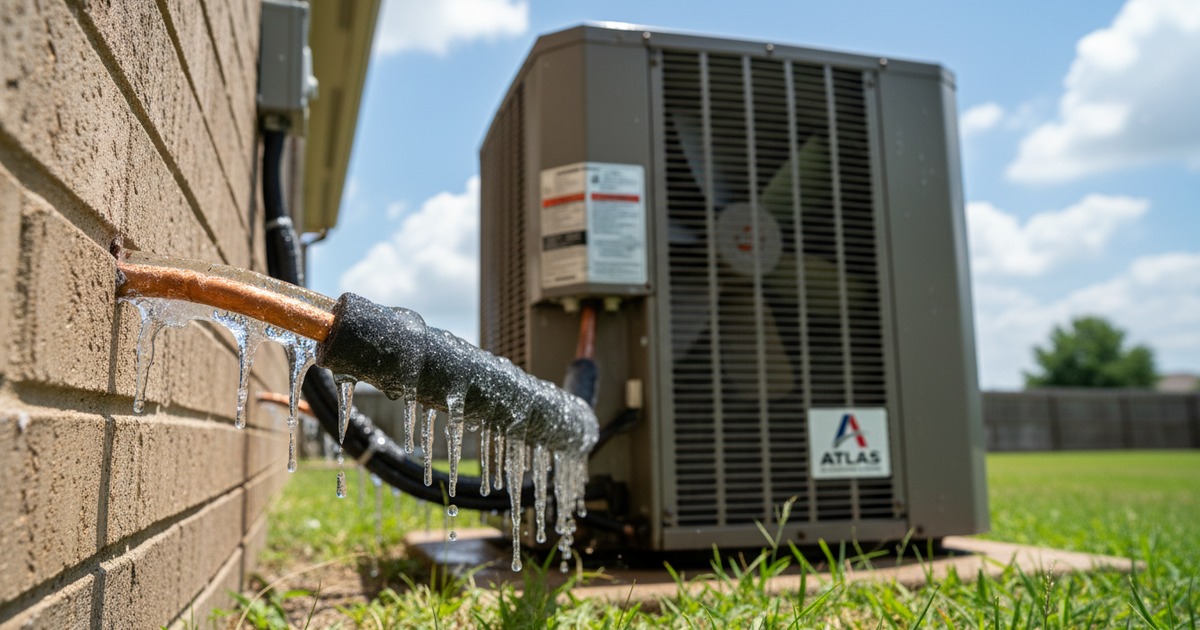
Seeing frost or ice buildup on the refrigerant lines or outdoor unit? Stop running the system — here's what to do.
What's Going On
Understanding the Problem
You've noticed ice or frost forming on the copper refrigerant lines, the outdoor unit, or even on the indoor evaporator coil. This seems impossible in Houston heat, but it's a common problem. When something restricts airflow or causes refrigerant pressure to drop too low, the evaporator coil gets so cold that moisture in the air freezes on it — and the ice spreads from there.
Diagnosis
Common Causes
1Dirty air filter (most common)
A clogged filter restricts airflow across the evaporator coil. Without enough warm air flowing over it, the coil temperature drops below freezing and moisture in the air turns to ice. This is the #1 cause.
2Low refrigerant
When refrigerant is low (from a leak), pressure in the evaporator drops, and the coil temperature plummets below freezing. The ice starts on the coil and can spread all the way to the outdoor unit along the refrigerant lines.
3Blower motor failure
If the blower motor is weak or has stopped, air isn't moving across the coil even with a clean filter. Same result — not enough warm air, coil freezes.
4Blocked return vents
Furniture, curtains, or closed doors blocking return air vents reduce airflow to the system. If enough vents are blocked, the system starves for air and the coil can freeze.
5Running AC in very cold weather
If you run the AC when it's below 60°F outside, the system can freeze because the outdoor temperature is too low for proper refrigerant operation. Houston doesn't see this often, but it happens on cool spring or fall nights.
DIY Troubleshooting
What You Can Try
Turn the AC OFF immediately
Running a frozen system damages the compressor. Turn the system OFF at the thermostat right now.
Set the fan to ON
Switch the thermostat fan setting from AUTO to ON. This runs the blower without cooling, pushing room-temperature air over the frozen coil to help it thaw. This is the safest way to defrost.
Replace the air filter
While the system thaws, pull the air filter and check it. If it's clogged, replace it. This is the most likely cause.
Open all vents and registers
Walk through the house and make sure all supply and return vents are fully open and unblocked by furniture or curtains.
Wait 2–4 hours
It takes time for the ice to melt completely. Don't try to chip it off — you could damage the coil fins. Place towels around the indoor unit to catch melt water. Once fully thawed, try running the system again.
Know When to Call
When to Call a Pro
If the system refreezes after thawing with a clean filter and open vents, the problem is likely low refrigerant from a leak or a failing blower motor. Both require professional diagnosis and repair. Don't keep thawing and re-running — each freeze/thaw cycle stresses the compressor.
Pro Tip
Never try to speed up thawing by pouring hot water on the frozen coil or lines. The rapid temperature change can crack the copper tubing. Let it melt naturally with the fan running.
Need a Pro?
Services That Solve This
AC Repair
Fast, honest AC repair in Houston. We diagnose the real issue, explain your options, and get your cooling back fast. Licensed and insured.
Learn morePreventive Maintenance
Keep your Houston AC running efficiently with preventive maintenance. Catch small issues before they become expensive emergencies.
Learn moreMore Troubleshooting
Other Common HVAC Issues
AC Running But Not Cooling
Your system is on, the fan is blowing, but the house keeps getting hotter. Here's what to check before you call.
Read guide →AC Blowing Warm Air
The vents are pushing air, but it's warm. Here's what's going wrong and what you can do right now.
Read guide →AC Leaking Water Inside
Puddles under the air handler, water stains on the ceiling, or dripping from a vent — act fast to prevent damage.
Read guide →