
Heating Emergency
Warm Downstairs, Cold Upstairs?
Uneven heating between floors is one of the most common complaints in Houston two-story homes. Here's what's causing it.
What's Going On
Understanding the Problem
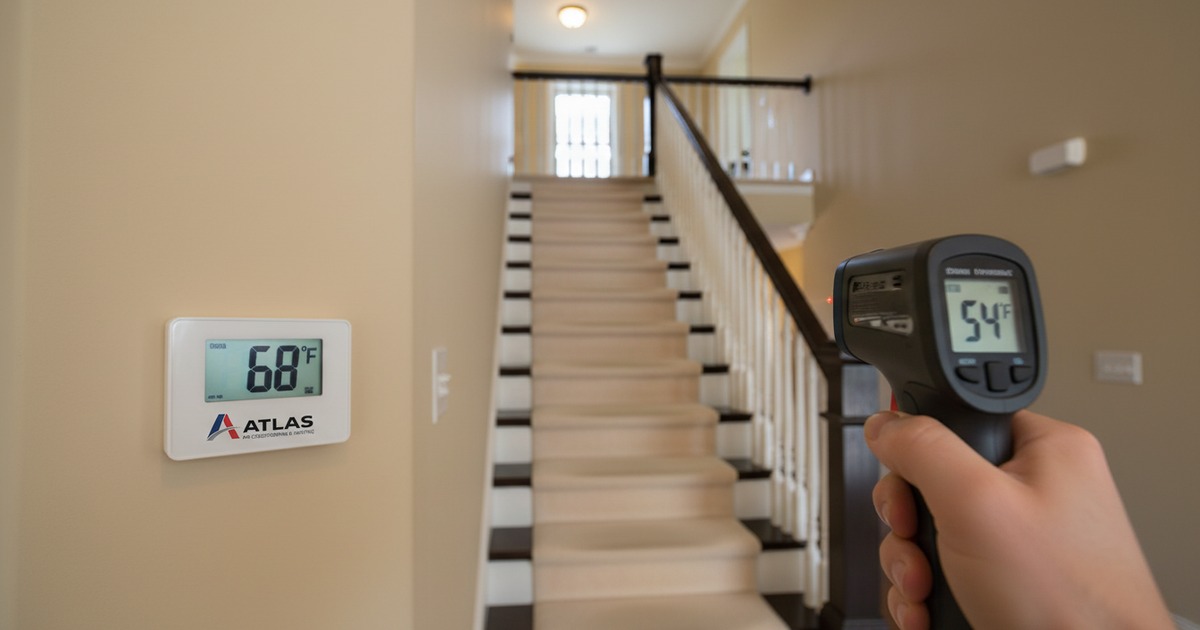
The downstairs is comfortable but the upstairs is noticeably colder — sometimes by 5–10°F or more. This is extremely common in Houston's two-story homes, where the ductwork runs through a scorching-hot attic in summer and a cold attic in winter. The air loses or gains temperature as it travels through the ducts before reaching the upstairs rooms.
Diagnosis
Common Causes
1Duct leaks in the attic
The most common cause. Ductwork in Houston attics takes a beating — extreme heat, humidity, and temperature swings degrade connections and duct tape over time. A leaky duct meant for the upstairs bedroom dumps heated air into the attic instead.
2Single-zone system
Most Houston homes have one thermostat on the first floor controlling the entire house. The system heats until the thermostat is satisfied downstairs, then shuts off — even though upstairs hasn't reached temperature yet.
3Poor insulation
Upstairs rooms sit directly under the roof. If attic insulation has settled, been disturbed, or was insufficient to begin with, the upstairs loses heat directly through the ceiling.
4Long duct runs to upstairs
Ducts to upstairs rooms are longer than downstairs runs. The heated air loses temperature as it travels through cold attic ductwork. By the time it reaches the upstairs vent, it's barely warm.
5Blocked or closed vents
Sometimes vents are closed in upstairs rooms (maybe during summer to redirect cooling) and never reopened for heating season. Or furniture is blocking the register.
6Return air imbalance
If there aren't enough return air vents upstairs, warm air has no way to circulate back to the system. The heated air rises, hits the ceiling, and just sits there while the system keeps trying to push more through the supply ducts.
DIY Troubleshooting
What You Can Try
Open all upstairs vents and registers
Walk through every upstairs room and make sure all supply vents are fully open. Move furniture away from registers. Open all bedroom doors to improve air circulation.
Check the air filter
A dirty filter reduces overall airflow. The longest duct runs (upstairs) feel the impact first.
Partially close some downstairs vents
This redirects more heated air to the upstairs. Don't close them fully — just halfway. This forces the system to push more air through the upstairs ducts.
Use ceiling fans in reverse
Set ceiling fans to run clockwise on low speed. This pushes the warm air that's collected at the ceiling back down to living level without creating a cool breeze.
Keep interior doors open
Closed doors in rooms without return vents create pressure imbalances that make uneven heating worse. Keep doors open to let air circulate freely.
Know When to Call
When to Call a Pro
If the temperature difference between floors is more than 5°F, or if adjusting vents and fans doesn't help, you likely have duct leaks or an insulation problem in the attic. A tech can inspect the ductwork, seal leaks, and evaluate whether a zoning system (separate thermostats for upstairs and downstairs) would solve the problem.
Pro Tip
The most cost-effective fix for uneven heating in a Houston two-story is usually duct sealing and additional attic insulation — not a new HVAC system. We've seen 5–8°F improvements between floors just from sealing duct connections in the attic and blowing in additional insulation. The payback period is usually under 2 years in energy savings.
Need a Pro?
Services That Solve This
Heating Repair
Heating repair in Houston. When those cold snaps hit, we get your furnace or heat pump working fast. Licensed, insured.
Learn moreMini Split Installation
Ductless mini split installation in Houston — single & multi-zone. Typical cost $2,000–$4,500 per zone. Cool garages, additions, and rooms your central AC can't reach. Licensed, insured, official Daikin dealer.
Learn moreMore Troubleshooting